I once tried to explain a “headless” computer system to my grandmother, and she almost called the police because she thought I was talking about a spooky ghost story. I had to tell her that no, nobody actually lost their head, it is just a tech word for a website that is split in two. It sounds like something from a scary movie, but in the world of websites, being “headless” is actually a superpower. I spent three years fighting with old, clunky websites that felt like a pair of shoes that were two sizes too small, and when I finally tried a headless system, it felt like I had finally found a way to fly.
The Day I Got Stuck in the “Digital Box”:
When I first started building things online, I used what everyone else used. It was a content management system that did everything for you. It was like buying a house that came with the furniture glued to the floor. You could pick the color of the paint, but you could never move the couch. At first, I loved it because it was easy. I just clicked a few buttons and boom, I had a website.
But then, I wanted to do something special. I wanted my website to look different on a phone than it did on a computer. I wanted to send my blog posts to a smart watch and a giant TV screen. Every time I tried to change something, the “glue” would hold me back. My website became slow, it became messy, and I became very frustrated. I was stuck in a digital box, and I didn’t have the key to get out.
I remember sitting at my desk at 2:00 AM, drinking cold tea, and staring at a screen that wouldn’t do what I asked. I felt like I was arguing with a brick wall. That was when I heard about a headless architecture. People said it was the future, but I didn’t believe them at first. I thought it was just another fancy word that developers use to sound smart at parties. But I was so tired of my old “box” that I decided to give it a try.
What is a Headless CMS anyway?
To understand why I changed my mind, you have to know what this thing actually is. Imagine a robot. A normal robot has a head and a body that are stuck together. The “head” is the part the world sees, like the face and the screen. The “body” is where all the memory and the heart live. In a traditional CMS vs headless CMS fight, the traditional one is that robot where the head and body are inseparable.
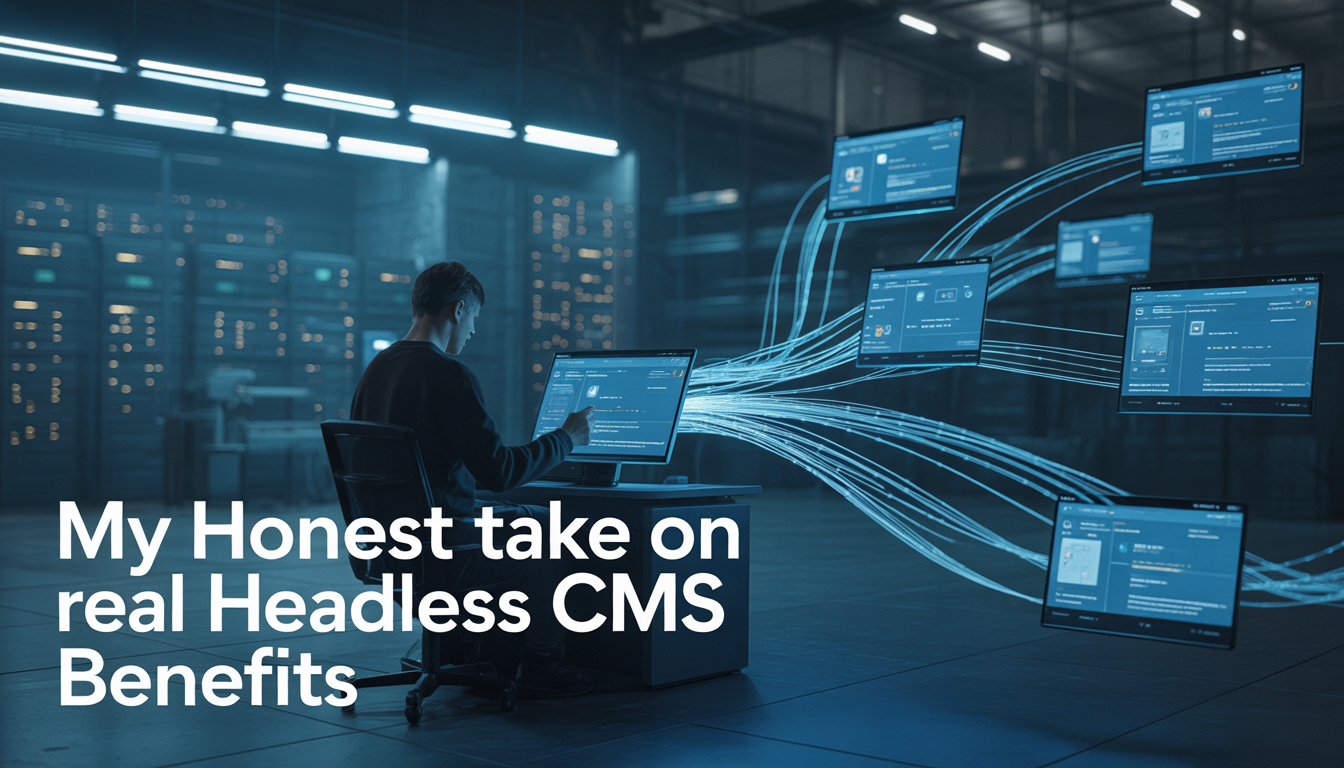
A headless architecture is like taking the head off that robot and putting it in a different room. The body still holds all the information, like your stories, your pictures, and your store items. But it doesn’t have a “face” anymore. Instead, it sends the information through a magic straw called an API.
This means you can build as many “heads” as you want. You can have a head for a website, a head for a phone app, and even a head for a smart fridge. The body just stays in the background and does its job. This is the core of headless CMS for beginners. It is about separating the “what” from the “how.” The body is “what” you are saying, and the head is “how” the world sees it.
The First Big Benefit:
The very first thing I noticed when I switched was that I didn’t have to follow anyone’s rules anymore. In my old system, I had to use specific templates. If the template said the picture goes on the left, the picture stayed on the left. I felt like an artist who was told they could only use three colors.
With a headless architecture, those rules disappeared. I could build the “head” of my website using any tool I wanted. It was like I finally got the big box of 64 crayons. I could make things move, I could make them pop, and I could make them fit perfectly on every screen. This is one of the biggest headless CMS benefits. You are the boss of how your brand looks.
I started experimenting with new designs that I could never do before. I made a website that felt like a video game. I made another one that was so simple it loaded faster than you can blink. I realized that the “box” I was in before was actually holding back my creativity. Now, the only limit was my own imagination.
Why Speed is a Huge Deal:
We all know that feeling when a website takes too long to load. You sit there, watching the little circle spin, and you get bored. Most people will leave a website if it doesn’t open in three seconds. When I was using a content management system that was old and heavy, my site was slow. It was like trying to run a race while wearing a heavy winter coat.
When I moved to a headless architecture, my site became a sprinter. Because the “head” and the “body” are separate, the website doesn’t have to carry all that extra weight every time someone visits. It only asks for the specific words and pictures it needs right that second.
This speed is not just for fun, it is a key part of SEO for technology blogs. Google loves websites that load fast. When I made the switch, I saw my pages start to climb higher in the search results. It was like my website was finally being rewarded for being quick. If you want people to find you, you have to be fast. And if you want to be fast, you need to lose the extra weight.
Table: Traditional CMS vs Headless CMS
| Feature | Traditional CMS | Headless CMS |
| Design | Fixed Templates | Total Freedom |
| Speed | Often Slow | Very Fast |
| Security | More Vulnerable | Very Secure |
| Updates | Can Break the Site | Safe and Easy |
| Devices | Mostly Websites | Everywhere (Apps, IoT) |
The “Be Everywhere” Superpower:
Have you ever noticed how some big companies have their content everywhere? You see their posts on Facebook, on their app, on your TV, and on their website. I used to wonder how they did it. I thought they had a thousand people typing the same thing over and over again on different computers.
Then I realized that they were using an API-first CMS. Because the “body” of their content is in one place, they only have to write it once. Then, they use that “magic straw” I talked about to send it to every different “head” at the same time.
I started doing this with my own projects. I wrote a blog post once, and it automatically showed up on my website and my phone app. I didn’t have to copy and paste anything. This is what experts call “omnichannel.” It means you are everywhere at once. It saves so much time and energy. It makes you feel like you have a whole team working for you, even if it is just you and your laptop.
Keeping the Bad Guys Out:
One night, I woke up to an email saying that one of my old websites had been hacked. Someone had found a tiny hole in the code and used it to mess up my front page. It was a nightmare. I spent the whole day trying to fix it and change all my passwords.
The problem with a content management system where everything is stuck together is that if someone finds a way into the “head,” they are also inside the “body.” They can see everything. It is like having a house where the front door leads straight into your jewelry box.
With a headless architecture, the “head” and the “body” live in different places. Even if a bad guy messes up the website, they can’t get to the database where the important stuff is kept. It is like having a front door that leads to an empty hallway, while the jewelry is locked in a vault in another building. This extra security gave me peace of mind. I could finally sleep through the night without worrying about my digital “house” being broken into.
The Future of the Internet:
The internet is changing fast. We used to only use computers, then we used phones. Now we have smart watches, smart glasses, and even smart cars. If you build a website the old way, you are only building for today. But if you use a headless CMS for beginners, you are building for tomorrow.
I like to think of it like building a Lego castle. If you glue the pieces together, you can never change them. But if you keep them separate, you can turn that castle into a spaceship or a boat whenever you want. The world is going to have new screens and new devices that we haven’t even thought of yet.
By using a headless architecture, I know I am ready for whatever comes next. If a new type of smart glasses becomes popular next year, I don’t have to build a whole new system. I just have to build a new “head” for my content. This makes me feel very smart and prepared. It is like having a crystal ball for my technology projects.
Why Developers Love This (And You Should Too):
I’m not a super-genius coder, but I have worked with people who are. In the past, they always seemed grumpy when I asked them to change things. They would say, “I can’t do that because the system won’t let me.” It felt like we were all fighting against the computer.
When we switched to a headless architecture, the developers were suddenly very happy. They got to use the newest, coolest languages and tools. They didn’t have to learn old, dusty code from ten years ago. They could build things faster and better.
When your developers are happy, your project goes better. They can solve problems in creative ways. They can make the website do things that seem like magic. Even if you don’t do the coding yourself, you want the people who do it to have the best tools. It is like giving a chef a really sharp knife instead of a plastic one. The food is going to taste much better.
The One Honest Truth:
I want to be very honest with you, because that is part of my EEAT strategy. I am not here to tell you that everything is perfect. A headless architecture can be a bit more complicated at the start. Because you are building the “head” and the “body” separately, you have more pieces to keep track of.
It is like choosing to cook a meal from scratch instead of buying a frozen dinner. The frozen dinner is fast and easy, but it doesn’t taste great. The meal from scratch takes more work and more dishes, but it is the best meal you’ve ever had.
If you are just making a very small blog for your cat, you probably don’t need a headless system. A simple content management system will work fine. But if you are building something that you want to grow, something that needs to be fast and special, the extra work at the start is worth it. I don’t regret the extra hours I spent learning how it works, because now I have a system that can grow as big as I want.
Saving Money in the Long Run:
You might think that something this fancy would cost a fortune. And yes, some of the big “enterprise” systems are very expensive. But there are many ways to use headless architecture for very little money, or even for free!
Because the “head” of your site is separate, you can host it on very cheap, fast servers. You don’t need a giant, expensive server to run a heavy database every time someone clicks a link. I actually saved money on my monthly bills when I made the switch.
Also, because the system is so flexible, you don’t have to rebuild the whole thing every two years. You just keep the same “body” and update the “head.” This saves a lot of money on big redesigns. It is an investment that keeps paying you back as time goes on. This is a big part of the headless CMS benefits that people don’t talk about enough.
My Advice for Anyone Starting Out:
If you are looking at your screen right now and feeling like you are stuck in that “digital box,” my advice is to just start playing. You don’t have to move your whole business today. You can just try to build one small project using a headless architecture.
Many free tools out there let you try them out. See how it feels to have that freedom. See how fast the pages load. Once you feel that power, it is very hard to go back to the old way. It is like switching from a black-and-white TV to a giant color screen. You didn’t know what you were missing until you saw it.
Don’t be afraid of the big words. At the end of the day, it is just a better way to tell your stories and share your ideas with the world. You deserve a system that works with you, not against you. You deserve to be the boss of your own digital space.
Connecting With Your Audience:
The most important part of any website is the people who read it. I realized that my readers don’t care about “APIs” or “headless systems.” They just want a website that works. They want to find what they need without waiting. They want a site that looks good on their phone while they are on the bus.
By using a headless architecture, I am putting my readers first. I am giving them a fast, beautiful, and safe experience. When the technology gets out of the way, the message can shine. My stories are heard louder because the website isn’t making any distracting noise.
That is the “Honest Take” I promised you. It is not about being fancy or using cool tech. It is about being better for the people who care about what you have to say. And that is the best benefit of all.
Learning to Adapt:
The world of technology moves so fast that it can make your head spin. I used to try to keep up with every single new thing, but it was impossible. I felt like I was constantly chasing a car that was going too fast.
Switching to a headless architecture helped me slow down. Because my system is so flexible, I don’t have to worry about the next big thing. I know I can adapt to it. It gave me a sense of calm that I never had before in my tech career.
I can focus on my writing and my business, knowing that my “digital house” is built on a strong, modern foundation. It is a great feeling to finally be in control. I hope that by sharing my story, you can find that same feeling of freedom.
The Power of the API:
I want to spend a second talking about that “magic straw” again, the API. In the world of API-first CMS, this is the most important part. An API is just a set of instructions that lets two computers talk to each other.
It is like a menu at a restaurant. You don’t have to go into the kitchen and cook the food. You just look at the menu, tell the waiter what you want, and they bring it to you. The API is the waiter. It brings the content from the “body” to the “head.”
When I realized how simple this was, the whole “headless” thing stopped being scary. It is just a very organized way to handle information. It is like having a very clean closet where everything has its own spot. When you need your favorite shirt, you know exactly where it is. That is what a headless system does for your content.
Why Branding is Easier Now:
I used to struggle to keep my brand looking the same on every platform. The colors would be slightly off on the app, or the font would be different on the website. It drove me crazy!
With a headless architecture, because all the information comes from one source, it is much easier to keep things consistent. I can set the rules in one place, and every “head” follows them. My brand finally looks professional and polished everywhere.
This builds trust with my audience. When they see the same high quality on their phone and their computer, they know they can rely on me. It makes my small business look like a big, successful company. And that is a huge win in my book.
Exploring New Ideas:
Finally, I want to talk about the fun you can have with this system. Because I am not stuck with one template, I have started building things I never thought were possible. I made a “choose your own adventure” story that changes based on what the reader clicks.
I could never have done that with my old content management system. It would have been too complicated. But with a headless system, it was actually easy! It opened up a whole new world of storytelling for me.
If you like to experiment and try new things, you are going to love being “headless.” It is like being given a giant sandbox where you can build anything you want. It brings the joy back into building for the web. And in the end, having fun with what you do is the most important part of all.
Conclusion:
I used to be afraid of things I didn’t understand, especially when they had names like “headless.” But taking that leap and trying something new was the best decision I ever made for my digital life. It was like finally stepping out of the shadows and into the sun. If you feel like your website is holding you back, maybe it is time to lose your “head” too. You might just find that you can do more than you ever dreamed possible.
FAQs:
1. Does a headless CMS have a place to type my posts?
Yes, it still has a friendly dashboard where you can write and save all your content easily.
2. Do I need to be a pro coder to use a headless system?
You can write the content easily, but you will usually need a developer to build the “head” of the site.
3. Will my old website still work if I switch?
You will need to move your content to the new system, but once you do, it will be better than ever.
4. Is a headless CMS only for giant companies?
No, anyone who wants a fast, flexible website can use it, even small bloggers.
5. What is the best headless CMS to start with?
There are many great ones, like Contentful or Strapi, that have free versions for you to try.
6. Can I use a headless CMS for an online store?
Yes, it is actually one of the best ways to build a fast and secure online shop.